
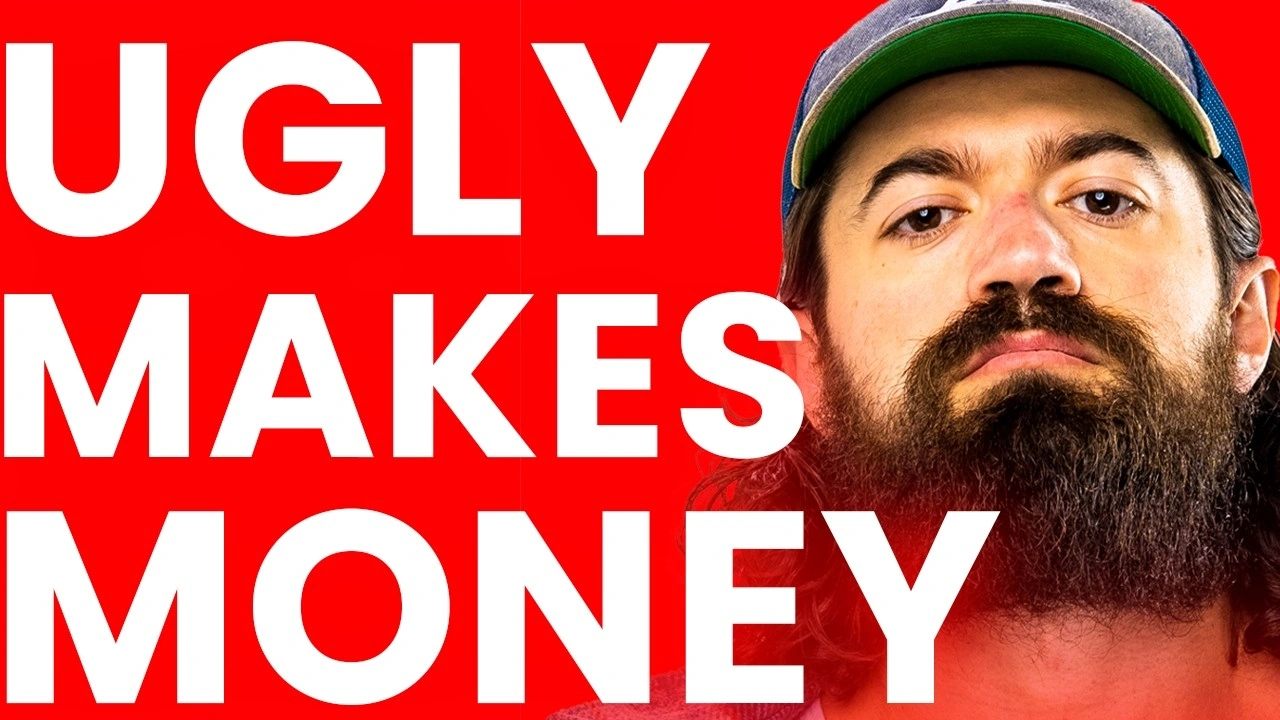
Alex Hormozi 14 Years of Marketing Advice - Marketing Consultant
A detailed overview of 12 internal copywriting hacks from a video, including headline strategies, unique selling propositions, audience targeting, justifications, damaging admissions, and calls to action, with examples, and a bonus hack on humor.
Public
Text
0
Owner & Editor:
Edited: about 1 year agoCreated: over 1 year ago
here is a consolidated, detailed overview of all 12 internal copywriting hacks and the bonus point from Alex Hormozi in the video https://www.youtube.com/watch?v=JDR-R--4HhM, with examples:
1. Headlines Come First The speaker emphasizes that headlines are paramount as they are the first, and sometimes only, thing people see. A strong headline can dramatically improve click-through rates.
- Core Principles for Headlines: Curiosity, differentiation, and appeal ("sexy") are key. Importantly, always have a headline, even if it's not perfect.
- Inspiration & Testing: Examine the initial seconds of successful organic content or ads for headline ideas.
- "Steal Like an Artist": Adapt successful advertising strategies from other industries for your own use.
- Headline Approaches: Employ curiosity, quotations, questions, and descriptions of emotional outcomes or experiences.
- Favorite Headline Formula: "How to [achieve desired outcome] without [common pain point] if you [biggest insecurity]." For instance, "How to speak confidently in front of strangers without ever practicing even if you're deathly afraid of speaking in public".
2. Say What Only You Can Say This hack focuses on highlighting unique achievements, experiences, or forms of proof that competitors cannot replicate.
- Proof Over Promise: Demonstrable proof is always more persuasive than mere promises.
- Speaker's Example: The speaker mentions spending tens of millions of dollars annually on ads within their own portfolio companies as unique proof.
- Other Examples: Being the sole triple black belt in a specific area or the only individual who has successfully assisted a particular niche market.
- The Value of Real Experience: AI cannot duplicate genuine human experiences and narratives.
- Building Trust: In an era of increasing AI-generated content, verifiable proof and authenticity are becoming indispensable.
3. Always Call Out Who You're Looking For (and Who You're Not) Clearly define your target audience and, perhaps more effectively, explicitly state who is not a suitable customer.
- Communicating Market Position: This clearly signals your niche.
- Example of Exclusion: "If you're below $250,000 a year... this isn't for you".
- Uncommon Weight Loss Example: Targeting "Only for people who are trying to lose over 30 lbs".
- The Power of Polarization: Rejecting unsuitable customers makes you more attractive to the right ones.
- Avoid Being "Vanilla": Don't attempt to appeal to everyone.
- Targeting an Individual: Write copy as if addressing one specific person.
- Levels of Audience Awareness: Adjust your message based on whether the audience is unaware of the problem, problem-aware, solution-aware, product-aware, or most aware.
- Specificity is Crucial: Use precise language that resonates with an individual's experiences, making them feel understood.
- Avoid Marketing Jargon: Translate vague terms into concrete moments and experiences.
- Specificity Example: Instead of asking "Are you overweight?", inquire, "Do you have trouble getting upstairs or going on a walk for a long period of time without a rash forming between your legs and sweating in places you didn't know you could?".
- Focus on Specific Moments: Describe the precise instances when someone encounters the problem your product or service solves.
- Bar Consulting Example: Instead of generic marketing, ask, "When you look behind the bar does it look like a bomb went off?".
4. Always Have a Reason Why Provide a justification for your offer or call to action, even if the reason seems somewhat arbitrary.
- Fraternity Party Analogy: You don't need a great reason for a party, just a reason.
- The Influence of "Because": The word "because" is highly persuasive.
- Bonus Points: Connect your reason to urgency or scarcity.
- Focus on the Next Step: Each line of copy should entice the reader to consume the next, ultimately leading to a click or desired action.
- Clarity is Paramount: A confused mind is unlikely to purchase or click.
- Examples of Reasons: A birthday (yours, your spouse's, your dog's), or a business anniversary.
- Compelling Even if Weak: Even a seemingly insignificant reason can be effective.
5. Damaging Admissions Acknowledging your flaws and being truthful can significantly enhance trust and persuasiveness.
- Research on Bias: Admitting a bias upfront can make your subsequent statements more believable.
- Prioritize Trust Over Promise: Trust is more valuable than making unrealistic claims.
- Eminem Analogy: By owning his perceived flaws, Eminem disarmed his critics.
- Address Concerns Proactively: Acknowledge potential objections before they are raised.
- The Power of "But": Use the structure: "Damaging statement BUT positive outcome" to emphasize the upside.
- Marker Example: "These markers smell like shit but they write four times longer than other markers and they don't dry out".
- Viagra Example: "Viagra only works for 4 to 6 hours but you're going to have the time of your life".
- Website Example: "Our websites are ugly as hell but they convert".
- Actionable Step: List all your flaws and common complaints, then own them in your copy.
- Humor as a Bonus: Combining humor with damaging admissions can be particularly effective.
- Gym Example: "Listen our gym has honestly pretty terrible parking. Our AC is kind of on and off. I don't have the best equipment but our sessions are more fun than everyone else's cuz it's all we've got".
6. Show Don't Tell Instead of merely stating benefits, describe the experiences and specific moments associated with achieving those benefits.
- Focus on the "Why": Break down the reasoning behind the benefit you're offering.
- Example: "More Sales": Don't just say "get more sales." Instead, describe the scenario of running out of order forms because customers are eagerly providing their credit card details.
- Example: "Advertising that Works": Illustrate the "problem" of phones ringing off the hook and not having enough salespeople to handle the influx.
- Example: "Full Gym": Describe the gym being so packed that you need to reorganize to create more space.
- Describe "Future Preferred Problems": Highlight the positive "problems" that arise as a result of using your product or service.
- Re-emphasize Moments: What does the moment of achieving the desired outcome look and feel like?.
- Uniqueness Through Description: Your distinct way of describing these moments will make your copy stand out.
7. Tie Benefits to Status Whenever Possible Connect the advantages of your product or service to an increase in the customer's status or perceived social standing.
- (The video transcript segment provided earlier didn't fully detail a specific example for this point before moving on, but the core idea is that people are motivated by improvements in how they are perceived by others or their own sense of self-worth and standing.) The speaker implies that showing how your product/service elevates someone's status (e.g., makes them appear smarter, wealthier, more attractive, more exclusive, part of a desirable group) is a powerful motivator.
8. Use Urgency and Scarcity The speaker differentiates between urgency (time-based) and scarcity (quantity-based) and explains their role in prompting action.
- Distinction & Examples:
- Urgency: A promotion that lasts only until midnight.
- Scarcity: Offering only 100 spots for a program, with no more available once filled.
- Objective: To demonstrate demand and encourage quick decisions by lowering the "action threshold".
- Key to Effectiveness: Legitimacy is crucial. If you say an offer ends or is limited, you must honor that to maintain credibility.
- Maintaining Reputation: The speaker stresses the importance of adhering to scarcity limits to build trust for future offers and avoid being seen as manipulative.
- Further Resources: The speaker refers to his book "Offers" (page 104 for scarcity, page 112 for urgency) for more detailed strategies on various types of urgency and scarcity.
9. Implied Authority This hack focuses on leveraging perceived authority to build trust and make your message more persuasive.
- Building Trust: People are generally more inclined to listen to and trust figures they perceive as authoritative.
- Examples of Implying Authority:
- Stating unique achievements (e.g., "the only double secret black belt in the area").
- Highlighting the number of people helped (e.g., "transformed over a thousand people").
- Mentioning work with prominent or specific types of clients (e.g., "a pro athlete client").
- Longevity in the business (e.g., "been in business for 40 years").
- The aggregated experience of a team (e.g., "in aggregate we've done over 20 years of advertising").
- Using even small awards or recognitions to start conversations (e.g., "as seen on Oprah's best boot camps").
- Proof Reinforces Authority: This point often comes later in copy because it relies on the believability of your claims. Documenting achievements and collecting testimonials builds this persuasiveness.
- Social Proof Analogy: The speaker compares two restaurants on Yelp. A restaurant with significantly more reviews, even with a slightly lower average rating, often appears more authoritative and trustworthy due to the sheer volume of social proof.
10. Always Have a PS Statement The postscript (PS) is a highly read component of advertising copy.
- "Power Sentence": The PS statement is often the second most read part of an ad, right after the headline.
- Strategies for PS Statements:
- Emails: Use sign-offs that reward readers (e.g., a joke, fun fact, light content) to encourage engagement. Occasionally, this space can be used for a strong call to action.
- Advertising Copy:
- Disclaimer/Exclusion: Clearly state who the offer is not for. This can be surprisingly effective in attracting the right audience.
- Recap: Summarize the main points of persuasion or the core offer in a single, compelling sentence.
- Bonus: PPS Statement: The post-postscript (PPS) is noted as the third most read part of copy, so consider utilizing this space as well.
11. Have Clear Calls to Action (CTAs) Your calls to action must be unambiguous and guide the prospect on exactly what to do next.
- Simplicity is Key: Tell people precisely what action to take in a straightforward manner. Avoid any confusion.
- Example of a Clear CTA: "If you want X, click the button. On the next page, fill your information, then select a convenient time for you to come in so that you won't miss out".
- SAD-DO Correspondence (Say-Do): When you instruct someone to take an action and then accurately describe what will happen next (and it does), you build trust and increase your influence. Each fulfilled micro-promise makes them more likely to believe subsequent promises.
- Company Name as CTA Example: The speaker mentions his company name, acquisition.com, which itself serves as a direct call to action.
- Action-Oriented Steps: Outline clear, step-by-step instructions and manage expectations for what will occur after each step. This builds belief and encourages continued action.
12. Third-Grade Reading Level Write copy that is extremely easy to understand to reduce friction and increase conversion.
- Reduce Cognitive Load: Most copy fails because it requires too much effort to comprehend. Assume your reader is rushed, distracted, and may not have a high reading comprehension level in that moment.
- Simplicity Sells: Complex language creates friction and confusion, hindering persuasion. Simple language facilitates understanding and, therefore, sales.
- Characteristics of Easy-to-Read Copy:
- Short sentences.
- Small, common words.
- Big promises backed by proof.
- Use fewer adverbs and opt for stronger verbs (e.g., use "sprinted" instead of "quickly ran").
- Word concision (using fewer words to make the point) is good, but simplicity is more important.
- Testing Readability: The speaker uses free online reading level tools to ensure his copy is generally at a third-grade reading level.
- Analogy to Popular Books: Many widely popular books are written at a reading level that is accessible to a broad audience.
Bonus Hack: Use Humor Whenever Possible Incorporating humor can make your advertising more engaging and memorable.
- Entertainment + Education: Combining entertainment with education can significantly boost ad effectiveness. Entertainment expands reach, while education drives behavior change.
- Example: The Old Spice advertising campaign is cited as a highly successful example of using humor effectively.
- Prioritization: Humor is described as an "extra sauce" – beneficial but can be omitted if necessary, as ads can convert without it.
- Challenge of Humor: Creating humor that appeals to a broad audience is difficult, underscoring the importance of testing. The speaker likens this to how comedians test and refine their material in different venues to see what resonates widely.
Create an account to create public content for free!
With an account you can:
Organize your work by saving anything to your private dashboard
Copy any page you can see
Subscribe to get in app notifications changes of pages
Create your own curated searches for content you care about
Follow others
View history of what you have created, updated, or viewed
Upgrade to Pro!
Limited time offer
When signing up for a year, I will work with you for an hour to create prompts specific for your needs!Add specific people to edit or view your content
Use much higher AI limits plus advanced tools for prompts, pages, and apps.
Connect compatible external AI tools to the context you save in MyiWorlds.