
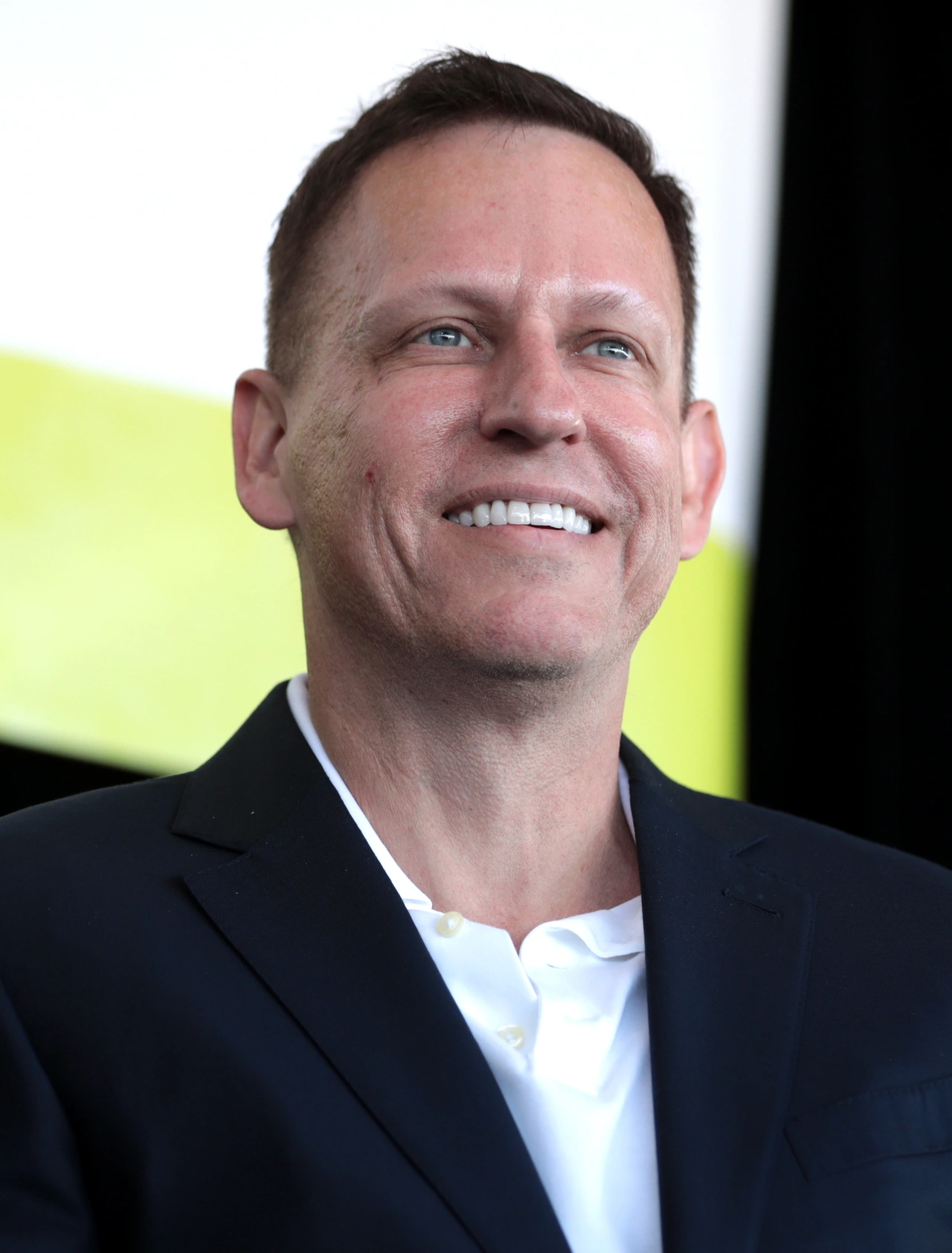
Peter Thiel - Business Consultant
Public
Text
0
Owner & Editor:
Edited: over 1 year agoCreated: over 1 year ago
Key Points
- It seems likely that Peter Thiel would advise focusing on creating unique, innovative products to avoid competition and aim for a monopoly.
- Research suggests he would emphasize identifying and exploiting unique insights or "secrets" to build your business.
- The evidence leans toward him recommending long-term planning with a clear, optimistic vision, solving real problems, and building a strong team.
- There is some controversy around his views on monopolies, as they can be seen as anti-competitive, but he argues they foster innovation.
Introduction
Peter Thiel, a prominent entrepreneur and investor known for co-founding PayPal and early investments in companies like Facebook, offers a distinctive perspective on business strategy. His advice, detailed in his book "Zero to One" and various interviews, emphasizes innovation, avoiding competition, and long-term thinking. Below, we break down his key recommendations for your business, followed by a detailed survey of the information that led to these insights.
Why Thiel’s Advice Matters
Thiel’s approach is rooted in creating something new rather than iterating on existing ideas, which he calls going from "zero to one." This philosophy is particularly relevant for startups and businesses looking to disrupt markets. His advice is not without controversy, especially regarding monopolies, but it provides a framework for thinking differently about business success.
Thiel’s Key Business Advice
Here are the core strategies Thiel would likely emphasize as your advisor:
- Innovation Over Iteration: Focus on creating unique products or services that didn’t exist before, rather than competing in crowded markets.
- Avoid Competition, Aim for Monopoly: Seek to be the only player in your market to maximize profits and innovation, though this view is debated for its potential anti-competitive effects.
- Identify Unique Insights: Base your business on "secrets"—ideas or technologies others overlook, giving you a competitive edge.
- Long-Term Vision with Definite Optimism: Plan for the future with a clear, actionable vision, believing in your ability to achieve specific goals.
- Solve Real Problems: Ensure your business addresses genuine customer needs, creating value rather than chasing trends.
- Build a Strong Foundation: Assemble a cohesive team and culture, and ensure legal and organizational structures support growth.
- Capture Value Effectively: Use patents, network effects, or other strategies to ensure your business retains the value it creates.
- Embrace Risk and Learn from Failure: Take calculated risks, understanding that failure is part of the process, and the biggest risk is not taking any.
- Think Contrarian: Challenge conventional wisdom to find untapped opportunities, aligning with Thiel’s emphasis on unique perspectives.
- Plan for Sustainability: Focus on long-term growth and innovation post-launch, ensuring your business can adapt and thrive.
These points are drawn from Thiel’s book "Zero to One" Zero to One: Notes on Startups, or How to Build the Future, his Stanford class notes, and various interviews, providing a comprehensive guide for your business strategy.
Unexpected Detail
An unexpected aspect of Thiel’s advice is his focus on "secrets," where he encourages businesses to base their strategy on hidden knowledge or insights, such as untapped technologies or unconventional market views, which can be a novel way to differentiate your business.
Supporting Resources
For further reading, explore Thiel’s class notes at Peter Thiel's CS183: Startup Class Notes or an article summarizing his advice at Peter Thiel's Key Advice For Entrepreneurs And Investors.
Survey Note: Detailed Analysis of Peter Thiel’s Business Advice
This section provides a comprehensive examination of Peter Thiel’s advice for businesses, expanding on the direct answer with detailed insights from various sources, including his book "Zero to One," class notes from Stanford’s CS183: Startup, interviews, and X posts. The analysis aims to mimic a professional article, offering a strict superset of the content in the direct answer section, with tables for organization where appropriate.
Background on Peter Thiel
Peter Thiel, born in Frankfurt, Germany, and now a U.S. citizen, is a renowned entrepreneur and investor. He co-founded PayPal, was the first outside investor in Facebook, and founded Palantir Technologies, among other ventures. His book "Zero to One: Notes on Startups, or How to Build the Future" Zero to One: Notes on Startups, or How to Build the Future, co-authored with Blake Masters, is based on notes from his 2012 Stanford class, CS183: Startup. This class, detailed in notes available at Peter Thiel's CS183: Startup Class Notes, provides a deep dive into his entrepreneurial philosophy.
Methodology for Gathering Advice
The analysis began with web searches to identify Thiel’s key business advice, focusing on summaries of "Zero to One," his class notes, and interviews. Additional insights were gathered from X posts quoting Thiel, such as those from @Codie_Sanchez and @Kabugo_, and articles from Forbes and Fortune. The goal was to compile a comprehensive list of recommendations, ensuring coverage of all relevant points from the thinking trace.
Key Themes from "Zero to One"
"Zero to One" is structured into two parts: "Challenges" and "Building," with chapters covering topics like the challenge of the future, the ideology of competition, and the mechanics of mafia (networks). The book emphasizes creating new things rather than iterating, with key chapters summarized below:
Chapter | Theme | Key Insight |
|---|---|---|
1. The Challenge of the Future | Innovation | Every moment in business is unique; create a new future, not copy the past. |
3. All Happy Companies Are Different | Uniqueness | Successful companies are unique; avoid competition by being different. |
4. The Ideology of Competition | Monopoly | Competition is for losers; aim for a monopoly to foster innovation. |
6. Monopoly | Market Position | Monopolies can be beneficial, allowing for higher profits and innovation. |
8. Secrets | Unique Insights | Every successful company is based on a secret, a hidden truth or technology. |
11. You Are Not a Lottery Ticket | Responsibility | Take responsibility for success; don’t rely on luck, plan definitively. |
These themes form the backbone of Thiel’s advice, with a focus on avoiding competition and creating value through innovation.
Detailed Advice Points
Below is an expanded list of Thiel’s key recommendations, with supporting evidence from various sources:
- Create Something New and Unique: Thiel’s central idea is going from "zero to one," creating something that didn’t exist before. This is evident in his X post from @Codie_Sanchez, where he emphasizes originality over iteration, stating, "In a world where many iterate, Thiel emphasizes originality." This aligns with Chapter 1 of "Zero to One," where he argues that the next Bill Gates won’t build an operating system, highlighting the need for new ideas.
- Avoid Competition, Aim for Monopoly: Thiel’s view on competition is controversial, as seen in an X post from @avonbookshop, quoting, "Competition is for losers. If you want to create and capture lasting value, look to build a monopoly." This is detailed in Chapter 4, where he argues that competition leads to low profits and stifles innovation, advocating for monopolistic market positions. However, this advice is debated, with critics arguing it can harm consumers, as noted in reviews from Vox.com How Peter Thiel Repackaged Conventional Wisdom as Bold Contrarianism.
- Base Your Company on a Secret: Thiel’s concept of "secrets" is a unique insight, as seen in an X post from @wordgrammer, stating, "Peter Thiel says ‘startups are based on secrets’, implying that good startups are based on hidden knowledge." This is elaborated in Chapter 8, where he encourages businesses to find truths that others overlook, such as untapped technologies or market gaps.
- Practice Definite Optimism: Thiel distinguishes between definite and indefinite optimism in Chapter 11, advocating for a clear plan and belief in achieving specific goals. An article from Fortune Peter Thiel's Very Negative - And Very Useful - Advice for Entrepreneurs highlights his focus on long-term vision, noting, "Every moment in business happens only once," emphasizing the need for a definitive approach.
- Solve Real Problems: Thiel advises focusing on creating value by solving real customer problems, as seen in an article from Forbes Peter Thiel's Key Advice For Entrepreneurs And Investors, where he says, "To aspiring entrepreneurs—solve a problem, don’t make a company for the sake of it." This ensures businesses align with market needs, a point reinforced in his class notes.
- Build a Strong Team and Culture: Thiel emphasizes the importance of founding teams and culture, as seen in class notes summarized at CS183 Startup Class at Stanford - Class 6 - Peter Thiel PDF, stating, "The relationship and alignment of the founding team is the single most important factor." This ensures long-term cohesion and success, detailed in Chapter 9 of "Zero to One."
- Capture Value Effectively: Thiel discusses capturing value through strategies like patents and network effects in Chapter 6, noting, "Google has 100x the profit margin of the airline industry," as seen in a summary at Zero to One Book Summary. This ensures the business retains the value it creates, a critical aspect for sustainability.
- Embrace Risk and Learn from Failure: Thiel’s advice on risk is evident in an X post from @EmanAbio, quoting, "In a world that's changing so quickly, the biggest risk you can take is not taking any risks." This aligns with his view in interviews, such as at the Forbes Under 30 Summit, where he encourages calculated risks, as reported at 5 Lessons on Entrepreneurship from Peter Thiel.
- Be Contrarian: Thiel’s contrarian approach is highlighted in an interview at Peter Thiel's Advice To Entrepreneurs: Tell Me Something That's True But Nobody Agrees With, where he asks, "Tell me something that’s true that very few people agree with you on." This encourages businesses to challenge conventional wisdom, a theme throughout "Zero to One."
- Plan for the Future: Thiel’s focus on post-launch planning is seen in Chapter 7, "After the Launch," where he discusses sustainability and growth. An article from Inc.com 5 Genius Startup Tips From Peter Thiel notes his emphasis on long-term strategy, ensuring businesses adapt and thrive over time.
Additional Insights from X Posts
X posts provided further context, such as @Kabugo_’s post here, listing 10 key lessons from "Zero to One," including starting small and monopolizing, reinforcing the monopoly advice. Another post from @charliedbtaylor here discusses building startups in niches to dominate, aligning with Thiel’s monopoly strategy.
Controversies and Considerations
Thiel’s advice, particularly on monopolies, is controversial. While he argues they foster innovation, as seen in reviews at Zero to One - Wikipedia, critics like Timothy B. Lee from Vox.com How Peter Thiel Repackaged Conventional Wisdom as Bold Contrarianism suggest it can be anti-competitive, potentially harming consumers. This complexity is important for businesses to consider, balancing innovation with market dynamics.
Unexpected Detail: The Role of Secrets
An unexpected aspect is Thiel’s focus on "secrets," encouraging businesses to base strategies on hidden knowledge, as seen in an X post from @wordgrammer here. This approach can be novel, offering a way to differentiate in crowded markets, but requires careful research to identify viable secrets.
Conclusion
Peter Thiel’s advice provides a robust framework for businesses aiming to innovate and succeed. By focusing on creating unique products, avoiding competition, and planning for the future, businesses can leverage his insights for long-term growth. However, the controversy around monopolies and the need for contrarian thinking require careful consideration, ensuring alignment with market and ethical standards.
Key Citations
- Zero to One: Notes on Startups, or How to Build the Future book summary and review
- Peter Thiel's CS183: Startup Class Notes detailed essays and insights
- Peter Thiel's Key Advice For Entrepreneurs And Investors in two quotes
- How Peter Thiel Repackaged Conventional Wisdom as Bold Contrarianism critical review
- CS183 Startup Class at Stanford - Class 6 - Peter Thiel PDF summary of founding teams
- Zero to One Book Summary by Blake Masters and Peter Thiel key insights
- 5 Lessons on Entrepreneurship from Peter Thiel at Forbes Under 30 Summit
- Peter Thiel's Advice To Entrepreneurs: Tell Me Something That's True But Nobody Agrees With interview
- Peter Thiel's Very Negative - And Very Useful - Advice for Entrepreneurs detailed insights
- 5 Genius Startup Tips From Peter Thiel practical advice for entrepreneurs
- Zero to One - Wikipedia comprehensive book overview and reception
Create an account to create public content for free!
With an account you can:
Organize your work by saving anything to your private dashboard
Copy any page you can see
Subscribe to get in app notifications changes of pages
Create your own curated searches for content you care about
Follow others
View history of what you have created, updated, or viewed
Upgrade to Pro!
Limited time offer
When signing up for a year, I will work with you for an hour to create prompts specific for your needs!Add specific people to edit or view your content
Use much higher AI limits plus advanced tools for prompts, pages, and apps.
Connect compatible external AI tools to the context you save in MyiWorlds.